cheesy crackers 3
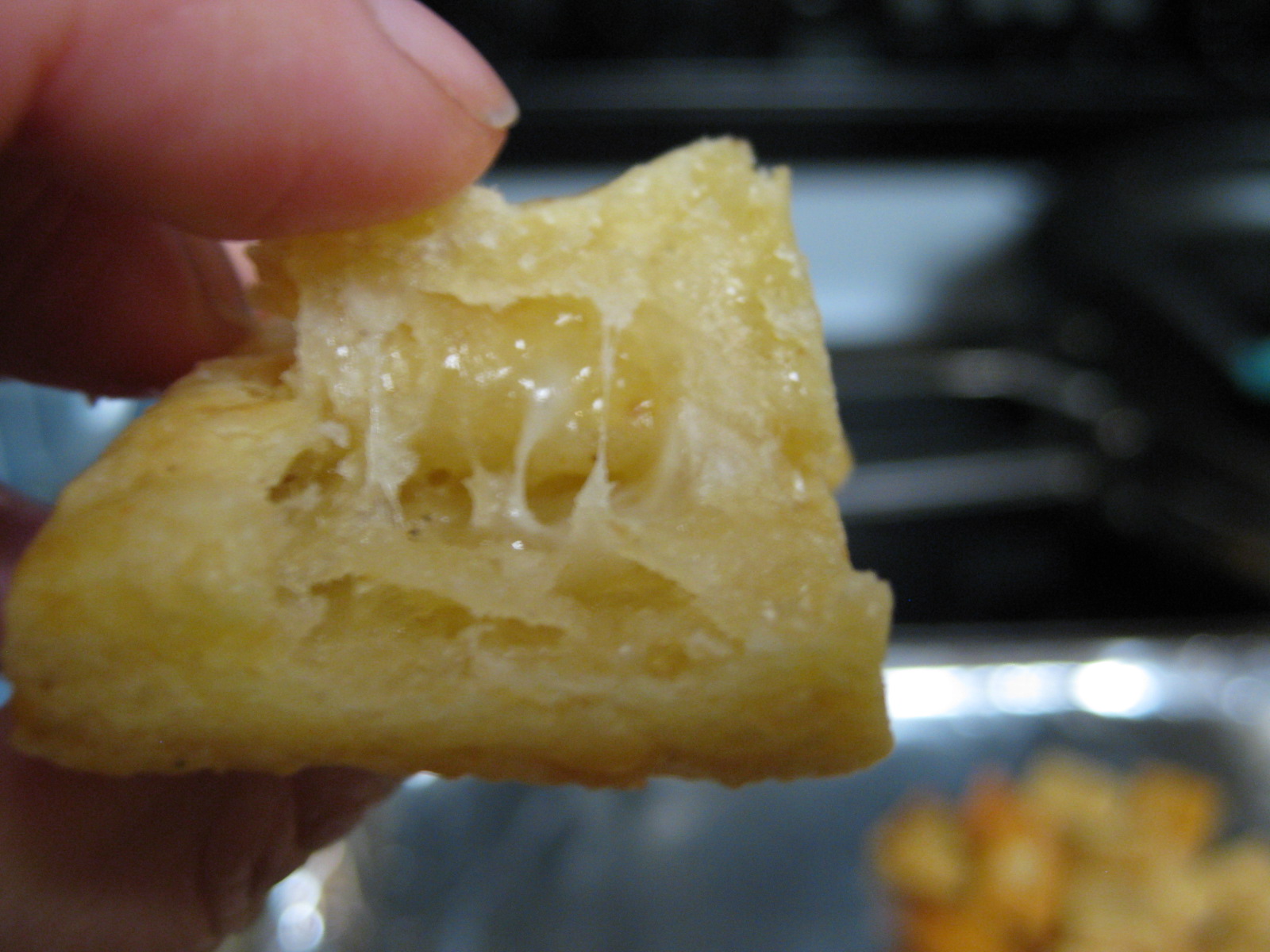
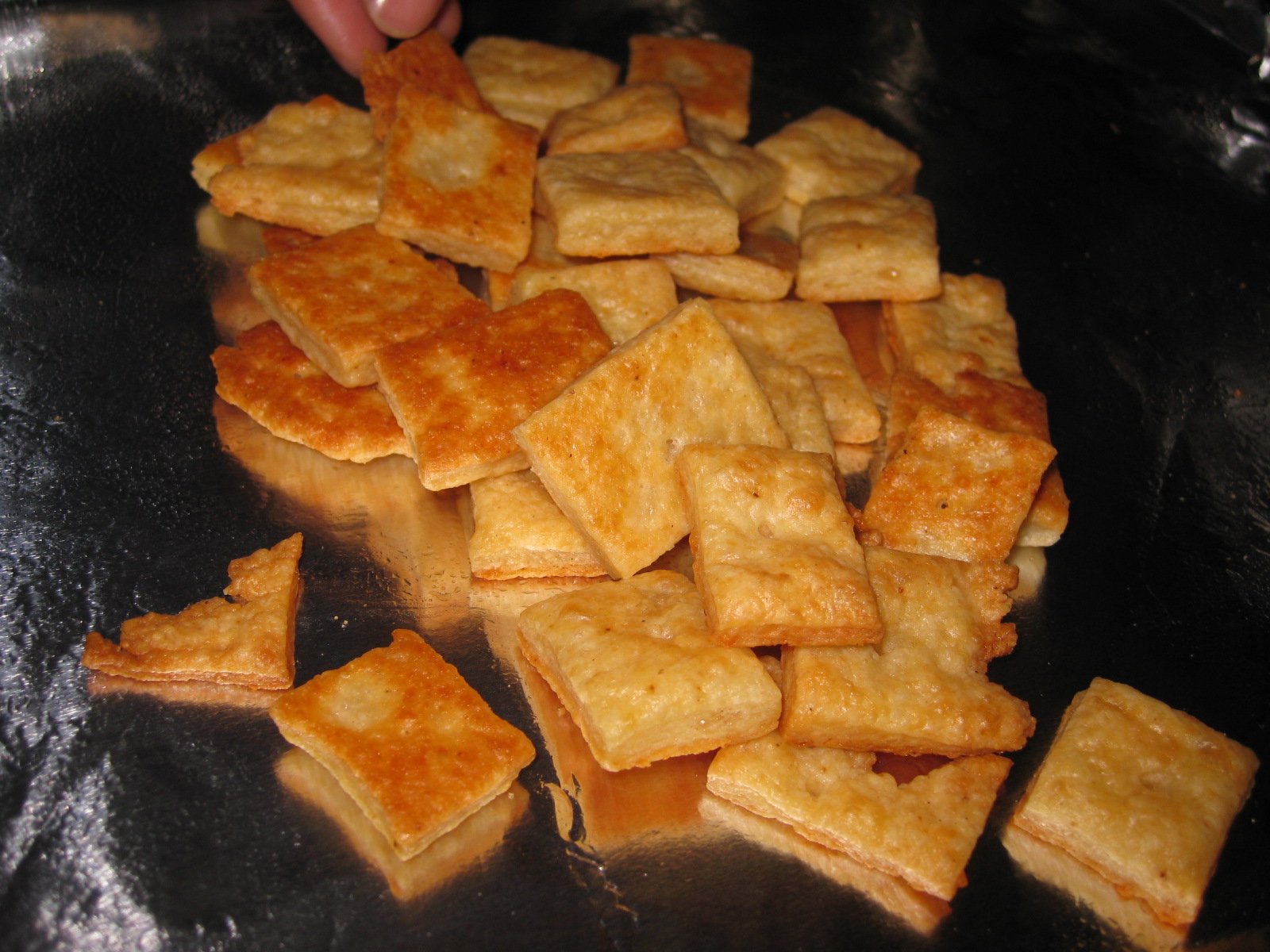
Finally succeeded in making an actual cracker! Original post and first attempt here:baked cheese. After reading and standing on the shoulders of the trials of this writer:
http://www.twincities.com/restaurants/ci_24521969/homemade-crackers-quest-crispy-crunchy-savory-snacks
I decided to try rolling it again, this time, more thinly. It said that the thickness of the dough was the key difference between a cracker and a “savory biscuit.” I’m going to post an excerpt from her site, because it’s so informative:
—
KEYS TO SUCCESS
Cracker ingredients are basic: flour, flavoring and a little moisture (often just water and a little oil). Mixing the dough is a snap. I used a food processor for all of the recipes I tried. And once I stopped being shy about adding more moisture when needed, I produced good, malleable doughs.
Apparently, what’s critical with crackers is what happens to that dough after it is made.
Rolling: Think thin, very thin. Many cracker recipes suggest rolling out dough to 1/8- or 1/16-inch thickness. (A penny is 1/16-inch thick.) Some achieve this using a pasta machine; others rely on a rolling pin. Only one of the doughs I made was pliable enough to go through the pasta maker; most of the doughs were too crumbly. I rolled and rolled the dough by hand, trying to achieve penny-thinness.
Take-away tip: Wrapping the dough in plastic and allowing it to rest for at least 15 minutes before rolling improves its “rollability.” So does starting with a moister dough.
Shaping: Those goldfish crackers are cute, but squares, diamonds and rectangles are easier to produce. I found that consistency in size helped the crackers bake evenly. Also, with straight-edged, not irregular, sizes, the dough was handled less. Regathering, rerolling and recutting dough can toughen it.
Take-away tip: Invest in a flexible ruler and a two-headed pastry cutter with a straight cutter and a crimping edge. Cutting with the crimper adds a decorative touch.
Baking: Some authors insist that crackers will firm up after they are removed from the oven, but I didn’t find that to be so. (OK, some of my first batches were too thick to bake crisp; see rolling rules above.)
Most of the cracker recipes called for a 350-degree oven and a baking time of 15 to 18 minutes. In my last and more successful attempts, I goosed the bake time to 20 minutes for the 350-degree group, and that helped. Interestingly, the recipe that produced the crispiest crackers required a 450-degree oven. Those crackers baked for 4 minutes on one side. Then they were flipped and baked for another 2 to 3 minutes.
Take-away tip: Don’t be afraid to fiddle with the baking time and oven temperature.
Cooling: I goofed when I moved some batches of crackers from the oven to a cooling rack — parchment paper and all. Crackers need to be moved immediately from the baking sheet and directly to the cooling rack so air can circulate and no condensation — the killer of crunch — can take hold.
Take-away tip: Put crackers directly onto cooling rack. Always allow them to cool completely.
Storing: Almost every recipe suggests storing cooled crackers in an airtight container. Again, I had little luck with this method, even after I swiped the little package of desiccant from a Bacos container and added it to the cracker bag.
Surprisingly, some of crackers from later batches that I dumped in a bowl and left on the counter at room temperature — even during recent wet weather — remained nice and crisp.
Take-away tip: Crackers that have not been correctly rolled, shaped, baked and cooled will get limp and stale when stored. Don’t shortchange any step of the process.
CONCLUSION
There’s an art to making crackers that are crisp and delicious. There’s also an easy way out. When the tidbit tastes fine but is not quite cracker-crisp, never apologize. “Just don’t call it a cracker,” one of my clever co-workers said. “It’s a savory cookie.”
—
My observations:
Chilling dough first makes it less sticky and more firm — less sticking to rolling board and pin, but it has more resistance to shaping.
Rolling out dough did help make it thinner — and the thinner sheets made crackers (1/16″?), the thicker ones (1/8″?) made savory, cheesy biscuits. Grace actually preferred the savory biscuits — I’ll have to keep that in mind next time. This could be a good Hors d’oeuvre or snack.
Well, finally had some success with this recipe. I want to try to make less cheesy, more crackery, crackers now that I have three batches under my belt and have some knowledge of the fundamentals of it. Maybe spicy soda crackers?
-Isaac
20140129