botched saltines to biscuits
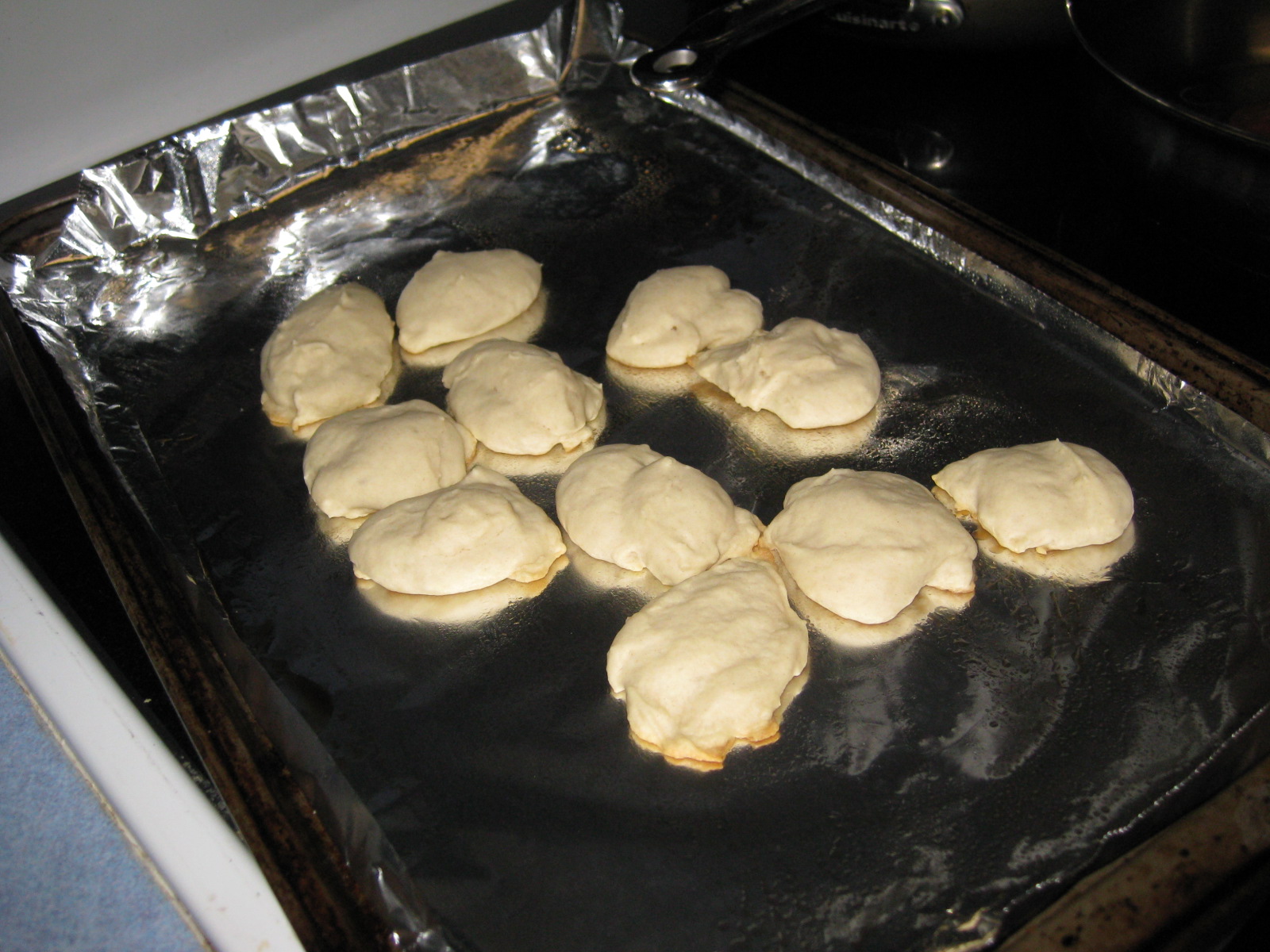
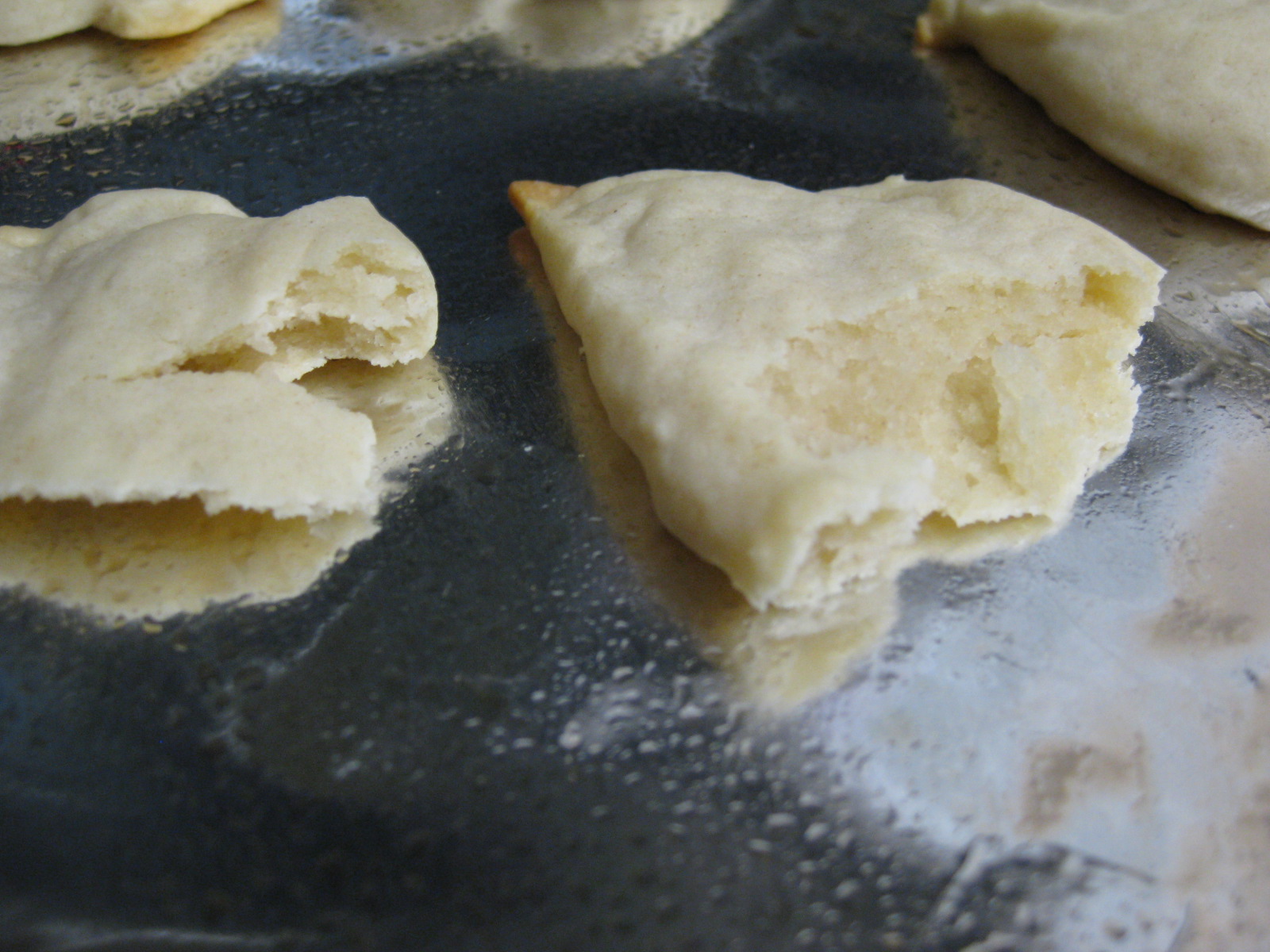
So, once per day, in three consecutive days starting on Thursday 20140130, I made saltines-turned-bland-biscuits, nutty biscuits, and sweet biscuits.
Following the success with the cheesy crackers, I wanted to turn my attention to non-cheesy crackers, starting with the humble saltine. I thought I was starting to get the hang of the flour to fat/liquid ratios involved, and the technique necessary to render it properly.
So I started following this recipe:
—
http://stresscake.wordpress.com/2010/04/28/something-easy-and-unlikely-homemade-saltines/
HOMEMADE SALTINE CRACKERS
Makes about 60 2”x2” crackers but may vary based on how thinly rolled and size cut
1 cup unbleached all-purpose flour
2 Tablespoons unsalted butter, melted
¼ cup water
½ teaspoon kosher salt
water for brushing
kosher or sea salt for sprinkling
- In the work bowl of a food processor, pulse the flour and salt to combine.
- Add the melted butter and process until a coarse meal – less than a minute.
- Add the water and process until a dough is formed – about 1-2 minutes. It may not come together and look sort of crumbly. Turn out on the work surface and knead until it forms a moist dough.
- Let rest 30-60 minutes to allow the gluten to relax.
- Preheat oven to 400°F and line two sheet pans with parchment paper.
- Divide the dough into quarters and roll thin. You have two ways to do this, I much prefer the pasta machine method but you can do it by hand.
- By hand – lightly flour the work surface and the top of the dough and using a heavy rolling pin, roll as thinly as possible.
- With a pasta machine – Roll ¼ of dough through twice on settings 1-6 then once on setting 7. You’ll have a long very thin sheet. Cut in half if it’s too long to handle easily.
- Cut into squares – I like about 2”x2” – brush lightly with water, sprinkle with salt.
- Bake 400°F for 8-10 minutes until lightly golden. Keep and eye on them as they brown quickly and rotate the pans halfway through baking.
- These will crisp up as they sit out of the oven and will keep, tightly wrapped, for a few days. Though if you live in a humid climate they may soften. If so, recrisp in a 350°F oven for a few minutes.
—
But after mixing the flour and butter, I accidentally added twice the amount of water necessary. I got what looked to me, something very similar to biscuit dough. Realizing that I couldn’t make cracker’s without adding lots more flour and butter, I decided to wing it, add some baking powder, and see what pure flour, butter, water and baking powder to do.
For reference, those botched saltines were:
4.5 oz flour
2 tblsp butter
1/2 cup water
1/8 tsp baking powder
baked in oven at 350 F for 15 min.
I added 1/8 – 1/4 tsp. baking powder, dropped the dough onto a pan, and 15 min at 350 F later, I got the blandest, flat biscuits I ever had.
I learned that you need more than 1/8 tsp. baking powder to raise 1 cup of flour. I learned that without salt or sugar, flour taste like nothing. It is a very neutral ingredient. butter in flour is a very neutral ingredient. This is what I imagine unleavened flour and oil bread tastes like.
I learned more about baking powder. I learned that baking powder is just a neutral leavener; baking soda is a basic leavener, and cream of tartar is an acidic… counter to baking soda. These are difficult to substitute items — for flavor, I’ve read, you can substitute vinegar for cream of tartar. And baking soda is particularly used to counter acidic ingredients in some pastries, etc.
—
Nutty Biscuits
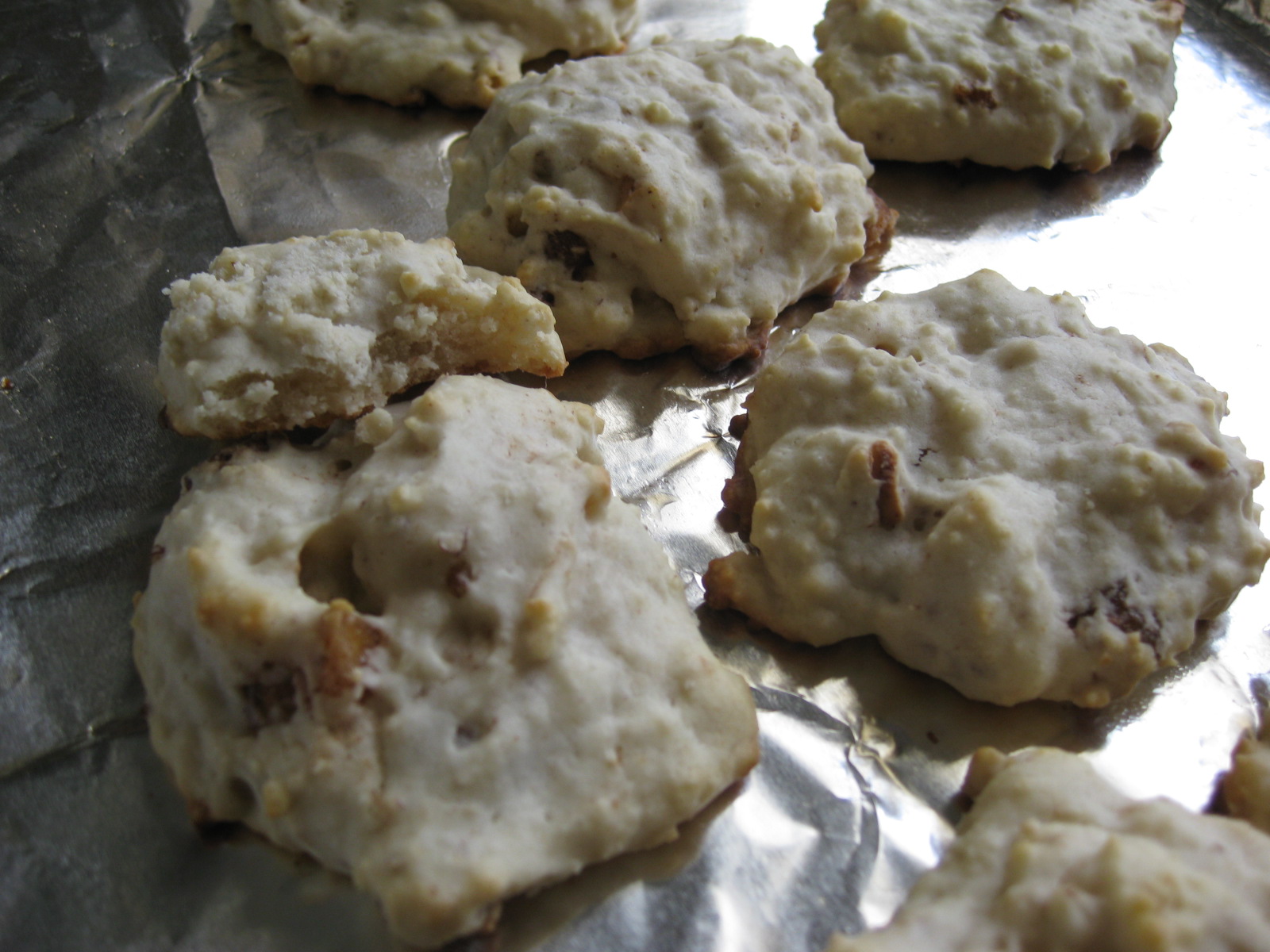
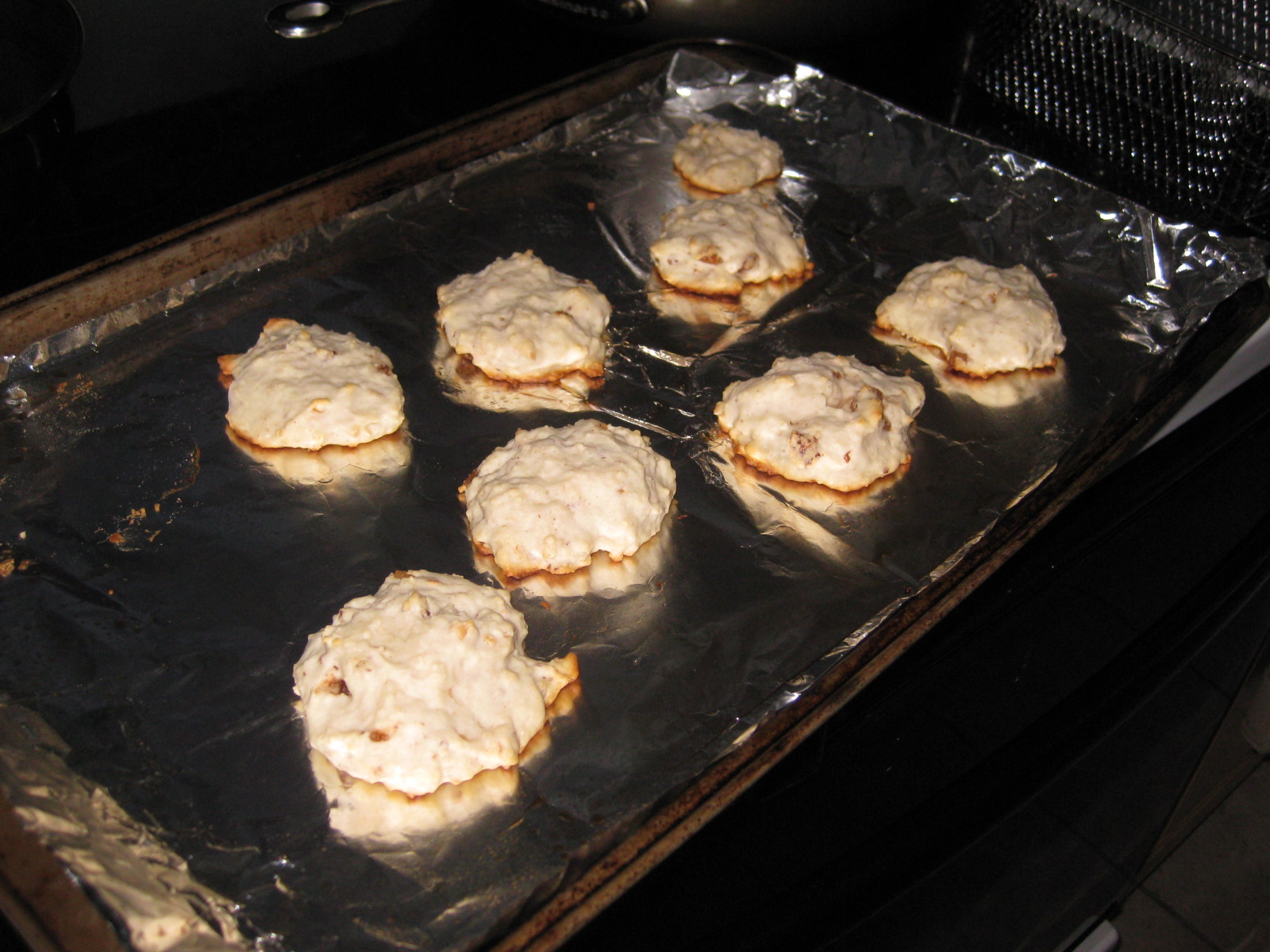
Friday, 20140131, I decided to take my experience the day before to make some slightly sweet, nutty cookies — the botched saltines reminded me of some cookies carol mama had made for a christmas celebration at her house many years ago — they were incorporated with red and green maraschino cherries, and I had liked them so much, I asked her to email the recipe to me. I’ve long since lost the recipe and email address to which she sent them to me, but I thought I’d try to make then again. In hindsight, I remember feeling bad not trying to replicate them for her after she had sent me the recipe all those years ago… I don’t think these nutty biscuits I made do them justice, but it was nice to go down gastro-memory lane for a while.
I’m still proud of this, because this was done with no reference to any recipes, and only out of the day before’s experience! They still weren’t finger licking good, but it was a breakthrough for me — baking goods out of knowledge and experience instead of allrecipes.com.
4.5 oz flour
3 tblsp butter
1/2 cup milk
1 tblsp sugar
3/4 tsp baking powder
~10-15 minutes at 375 F
The difference here was that I added an extra tablespoon of butter, 50% more butter, in an attempt to increase the richness and flakiness, I substituted milk for water to add creaminess, I added 1 tblsp of sugar for sweetness, I quadrupled the amount of baking powder, and I ground up some sweetened nuts to put into the batter.
The batter was a tiny bit richer, creamier, and sweeter, and puffier, and it was edible! But It wasn’t enough. Sampling some to daddy, he said something along the lines of “even for me, this could be sweeter”.
Lesson learned again of the proper proportions and ratios of fat, sugar to flour, as well as baking time. The tops weren’t quite that crusty brown I was hoping for.
—
Sweet Biscuits
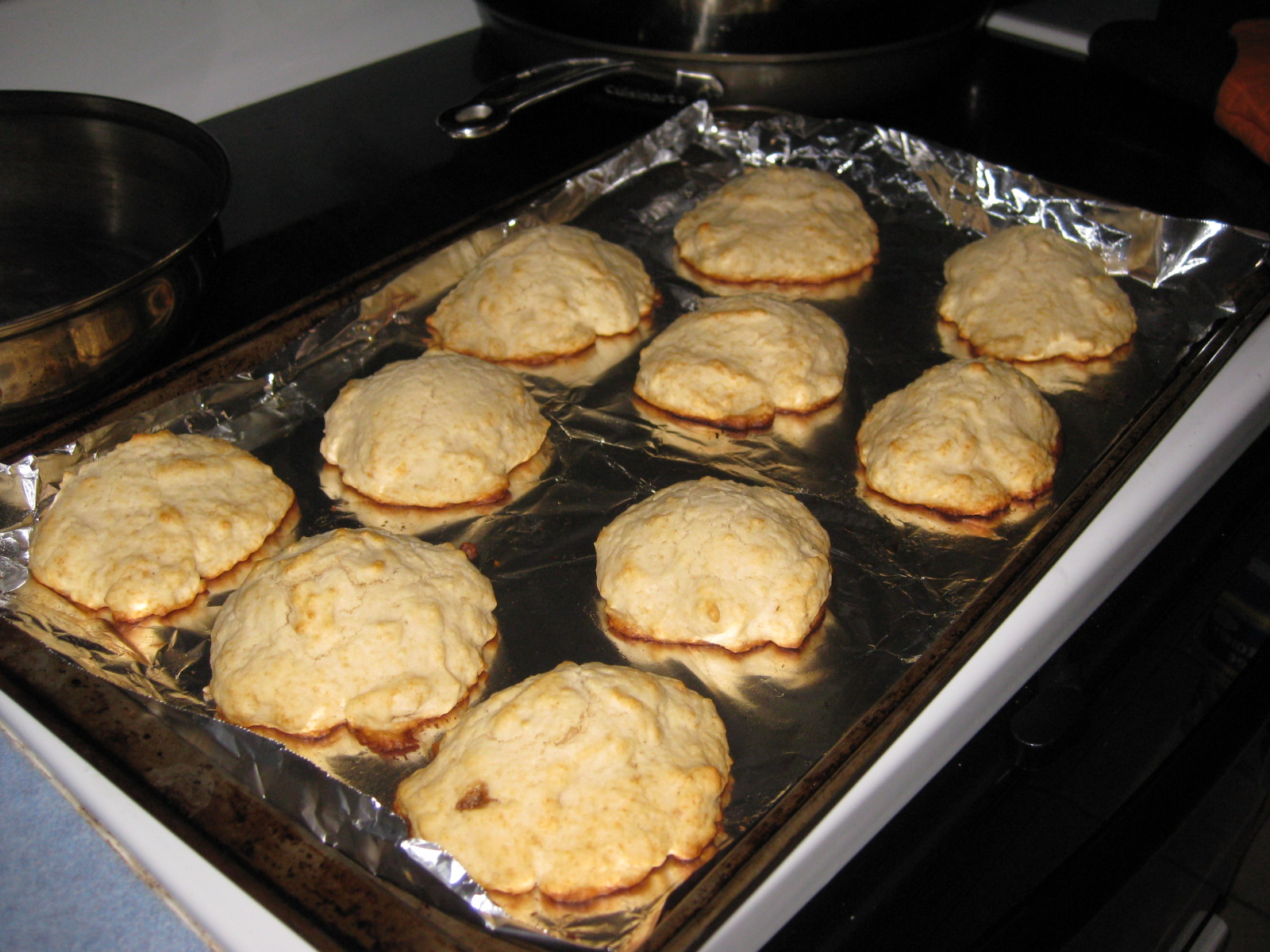
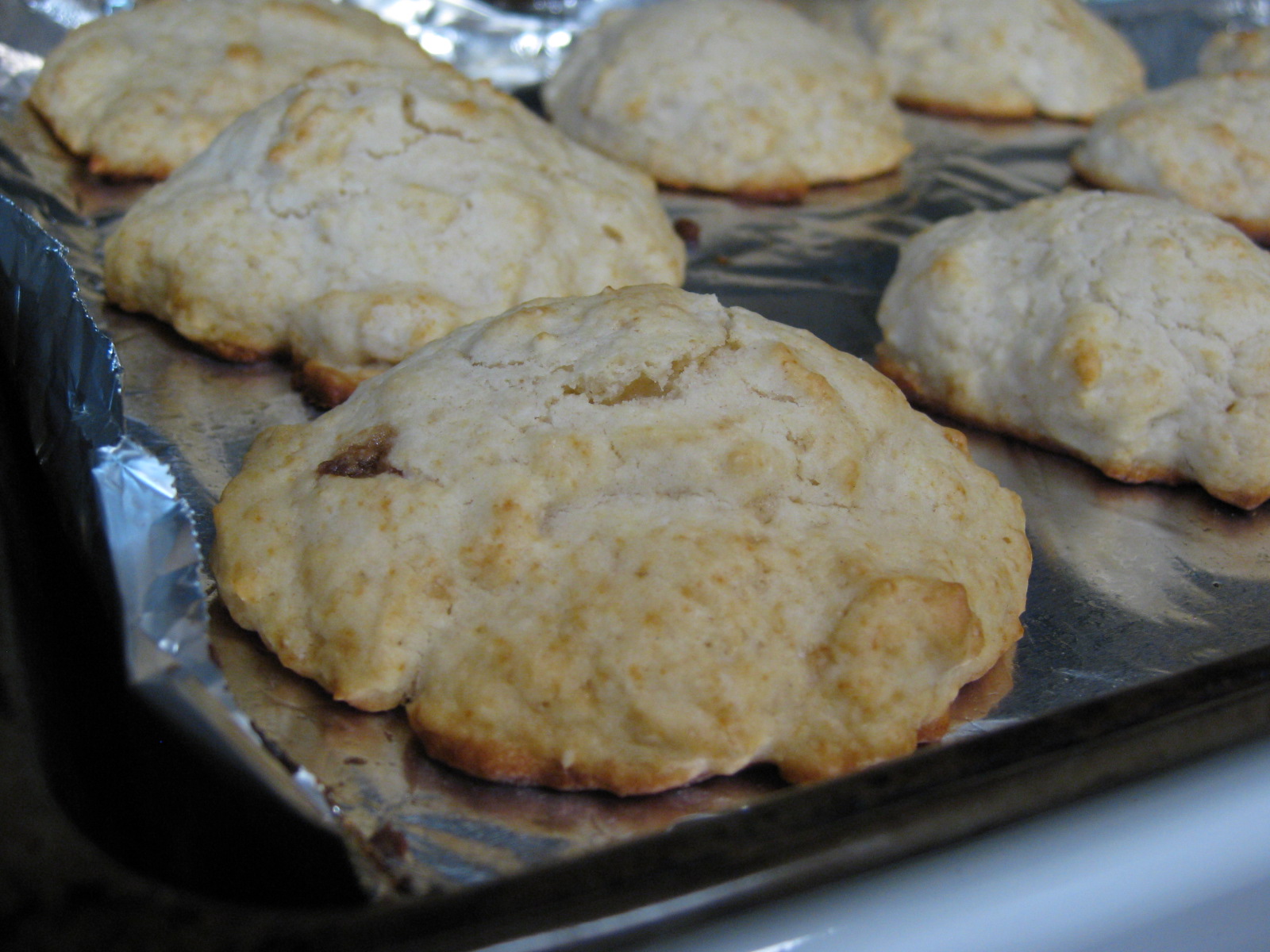
Day three of the experiment, on 20140201, I decided to go to a recipe for comparison.
Went to an old standby I had success with, E-Z drop biscuits:
—
2 cups all-purpose flour
1 tablespoon baking powder
2 teaspoons white sugar
1/2 teaspoon cream of tartar
1/4 teaspoon salt
1/2 cup melted butter
1 cup milk
Preheat oven to 450 degrees F (230 degrees C).
In a large bowl, combine flour, baking powder, sugar, cream of tartar and salt. Stir in butter and milk just until moistened. Drop batter on a lightly greased cookie sheet by the tablespoon.
Bake in preheated oven until golden on the edges, about 8 to 12 minutes. Serve warm.
—
I made this recipe, adding 3 tablespoons of brown sugar instead of the 2 teaspoons of white sugar (I wanted to finish the minuscale amount in the bag, and wanted to learn how sweet that would be), and leaving out the cream of tartar. I thought about adding some vinegar to the batter, but I wanted to see how the biscuits would taste without the tartar/acid. I didn’t understand why it needed it, there is no acid in the batter!
I thought the biscuits turned out very well, and they were sufficiently sweet — to what I was looking for at least. I still don’t know what cream of tartar/acid would have done to the flavor. The biscuits were fluffy and well browned, and well flavored. I learned more about the proper proportioning of sugar to add to batter if I want to make a sweet versus savory bread.
The batter was much sweeter tasting than the biscuit itself. I learned that batter is sweeter than final product.
I learned that you need quite a bit of baking powder to rise a quick bread so that it is fluffy. Like “2:1” flour:baking powder, 1 cup flour needs 1/2 tablespoon baking powder to rise properly.
The ratio of flour-butter-liquid was also a bit different. There was twice as much butter in here as my biscuits — and I think it made it tastier, more fatty and fluffy and wholesome. The ratio here was ~4:1, 1 cup flour needs 1/4 cup butter.
NOTE: the liquid was the same as my mistake before, the first saltine mistake that made me see the cracker batter as biscuit batter was the same. ~2:1 flour:liquid. 1 cup flour, 1/2 cup liquid. This apparently is the ratio of flour the liquid for drop biscuits.
I’ve also kindof gotten these measurements in my head:
1 cup flour – 4.4 oz, 125 g
1 tblsp ~ 15 ml, ~15 g water
1 teaspoon ~ 5 ml, ~5 g water
I’ve learned lots about these drop biscuits. It’s interesting where I should learn next.
20140201
-Isaac