20160214
After finding copycat recipes of barbacoa using butt roasts, which I’m sure are good, but are not what I’m going for:
http://www.thekitchn.com/recipe-to-feed-a-crowd-slow-cooker-barbacoa-beef-165301
This is a rather inauthentic recipe.^^
I finally found out how to make the “real” tex-mex barbacoa that are often found at restaurants
the secret is BEEF CHEEKS! or Cacheta de rez:
Barbacoa Using Cacheta de Res
In honor of National Hispanic Month, I decided to make Barbacoa. When I googled someBarbacoa recipes, I noticed that almost of them used butt roast but that isn’t how we make it. We use Cacheta de Res, aka, Beef Cheeks and this is the only way I’ve known how to make it. And in actuality, we make Barbacoa de Cabeza (a cow head) and make barbacoa out of that but for this, we are just using the beef cheeks.
Before I get to the very easy barbacoa recipe, I thought I’d share with you a tidbit about us. My real dad’s side of the family is Mexican, which makes me half. My husband and his family is Spanish. They all speak Spanish, sing Spanish, and often talk in Spanish when together. My kids who very much look white, call themselves Hispanic because that’s what they are and how we live. I’ve always considered myself Mexican because 1) you’re supposed to go by your Dad and 2) I just feel it.
We cook Mexican food all the time with homemade tortillas being a staple around here. We haven’t had homemade barbacoa in a long time so I thought the timing was perfect for it. One of the things I love about our Walmart is that I can find those unique cuts that I need, in this case, cacheta de res (beef cheeks). They also carry other parts of the beef head like tongue which we would have also put in this but they were sold out.
Barbacoa is probably one of the easiest foods to make. While many might dress it up, we prefer an original, plain version.

Recipe: Authentic Barbacoa Using Cacheta de Res
Ingredients
- 6lbs of Cacheta de Res (Beef Cheeks)
- Handful of Comino
- Handful of Salt
- Pepper to taste
- 32oz Beef Broth
- Water to Cover
Instructions
- Pour your broth, salt, pepper, and comino into your slow cooker.
- Add your cacheta de res and cover with water.
- Cook on low for 10 hours.
- When done, shred with forks and serve with rice, beans, and homemade tortillas. I also recommend you top with fresh cilantro and onion!
Variations
You could also add lengua de res (beef tongue) if you wanted.


So if you want to be truly Authentic with this, buy a cow head and cook it in the ground, shred all the cheeks, tongue, eyes, etc and you’ll have barbacoa. We think is easier and for me, slightly more appealing than the other…….
other resources:
https://www.pinterest.com/recipes/barbacoa-beef-cheeks/
Some other cool info on *authentic* barbacoa, made by actually barbeque-ing beef in a pit in the ground:
http://forum.bradleysmoker.com/index.php?topic=26725.0
Barbacoa de Cachete de Res Hecho en el Bradley
Beef Cheeks in the Barbacao Style made in the Bradley
I recently posted Barbacoa de Cabeza de Vaca Hecho en el Bradley. (Cow Head in the Barbacoa Style Made in the Bradley)
(http://forum.bradleysmoker.com/index.php?topic=26408.0)
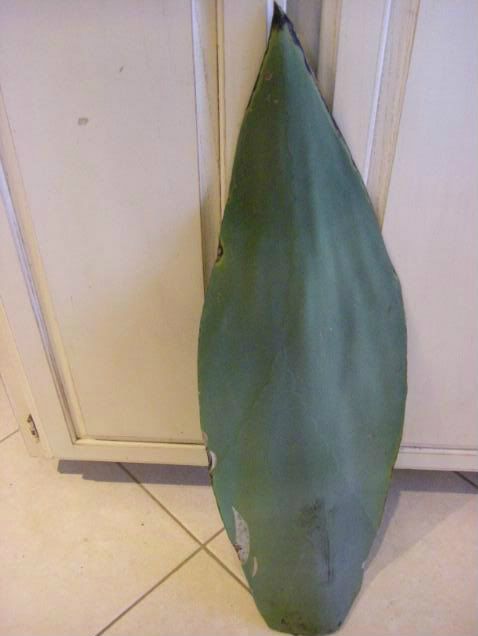
It describes my attempt to duplicate traditional border barbacoa made in a pit in the ground lined with coals covered with rocks. A pot of vegetables sits on top of the rocks. Then a cow’s head surrounded by maguey leaves is laid over the pot. Other cuts of meat may be a part of the cook. Burlap or tarps cover everything. The pit is sealed tight with dirt. It is left overnight to slowly steam or braise. This produces a unique final feast. The Bradley did and excellent job of recreating this ethnic dish.
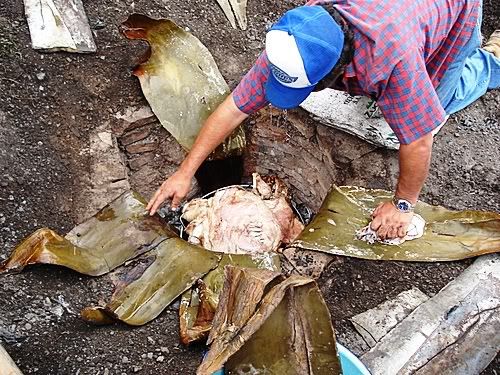
Traditional barbacoa pit with maguey leaf covering.
This post is in response to those who PMed me regarding smoking just the cheek meat and not the whole head.
I remember the first time I realized I was eating real barbacoa. It was many, many moons ago. My brother and I were coming back from an early morning quail hunting run. We passed a Taquería on wheels parked on a vacant lot in a small West Texas town of about 1000 people. It looked like the right place to pull into. I bought a barbacoa burrito.
I took a couple of bites, walked back to the window and asked the Hispanic proprietor what was in the tortilla. He replied “chick meat”. I was a little insulted and told him I was sure this wasn’t chicken. He pinched and pulled on his cheek saying “no no no pollo (chicken). It ess chick meat de cabeza de vaca,” still stretching his cheek out with a dark brown hand. I struck up a conversation and got a lot more information in broken English combined with a lot of Spanish. He was excited to tell me about his pit, the cabeza, the maguey leaves, burlap covering and all the other details.
He had done it right.
“My brother and me, Texas red sunrise casting long shadows over rugged land as far as the eye could see, a chilly morning, hot coffee, shotguns, bird dogs, bagged quail and now a fine Mexican breakfast. All was right with the world. This was the way life should be everyday.”
I was a believer and began to seek out real barbacoa. Since then it has been my privilege to have paticipated in pachangas where pit or hole in the ground cabeza is made.
It is with regret that this method of cooking is becoming a lost art. Over the years it has become less available in its true form. Obviously, health inspectors cannot condone cooking in a dirt pit so other methods have come into play in Hispanic restaurants. Unfortunatley, many restaurants try to pass crock-pot concoctions involving other cuts of meat as barbacoa. Almost as disturbing is the lack of smoke involved in these impersonators.
A rule of thumb to find real barbacoa; if you get in line and find you are surrounded by mostly Hispanics speaking their native language; that’s a good sign that you are in the right spot.
As I explained in a previous post, cheek meat has a texture and flavor that cannot be duplicated by other more civilized cuts. It is not the spices that make the dish; it is the cut, the hint of smoke and the herbal tinge imparted by the maguey leaf.
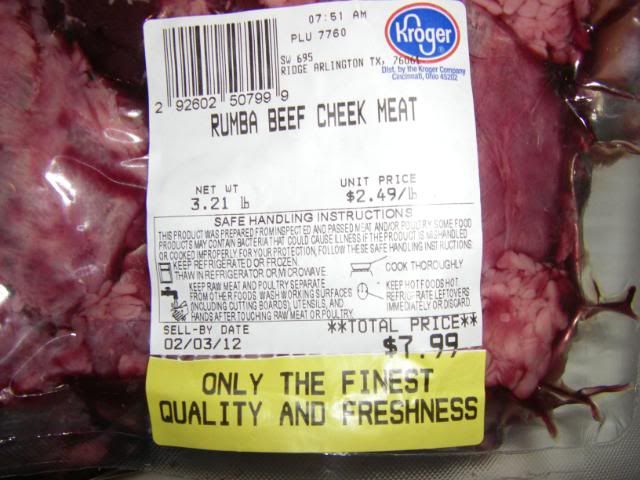
Fortunately, cheek meat is not so hard to find in many parts of the country. Cargill has started cryovacing several offal meats under the brand Rumba. It can now be found in the meat coolers of non other than Walmart and Kroger.
The maguey leaf, well that is another story. If you can’t buy one or snatch one from a neighbor’s century plant, banana leaves can make a decent substitution. As a last resort, just use aluminum foil during the smoking process to protect the meat from direct heat. Add a little powdered bay leaf or herb of your choice to replace the Maguay leaf herbal tinge. You will not miss all that much in flavor. The meat will stand on its own merits.
My hope is the simplicity of this recipe will bring some of my fellow Bradley devotes to try this delicacy.
Ok, if you’ve read this far, maybe you’ll be willing to go a little further.
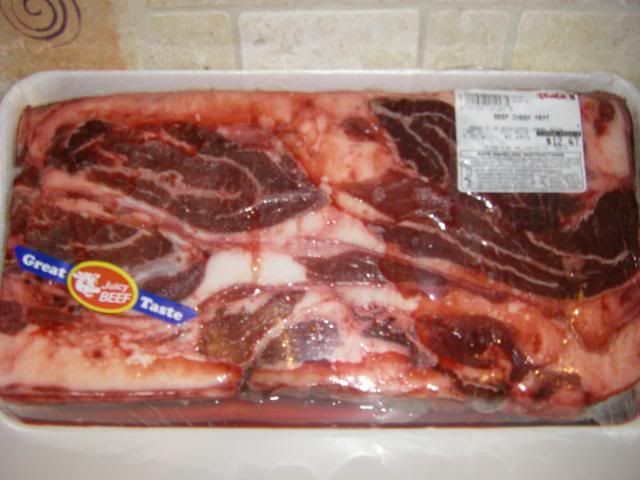
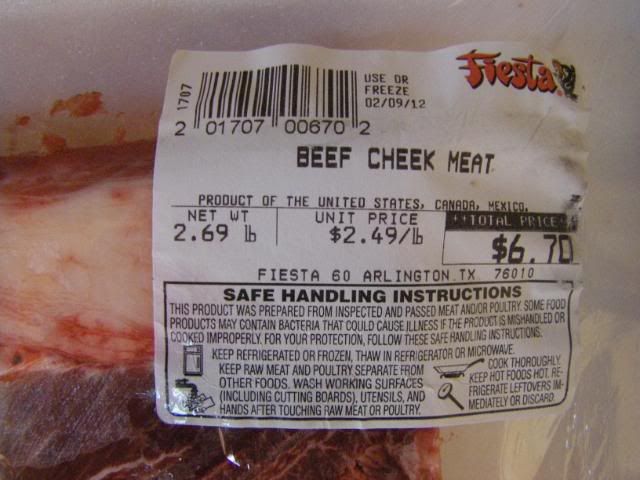
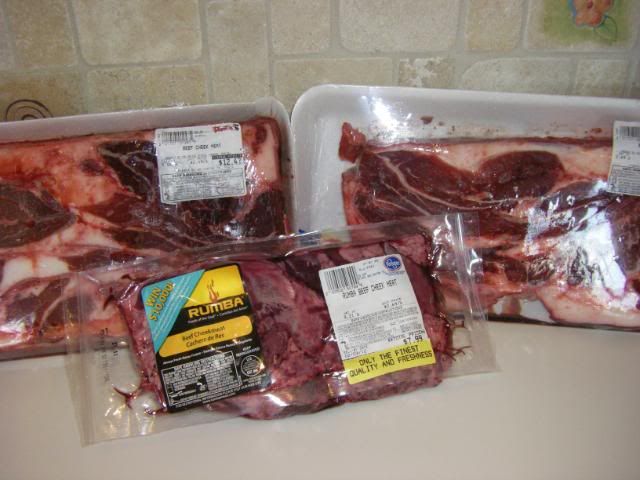
Fiesta Brand Cheek Meat (Fiesta is a Hispanic Grocery Chain in Texas)
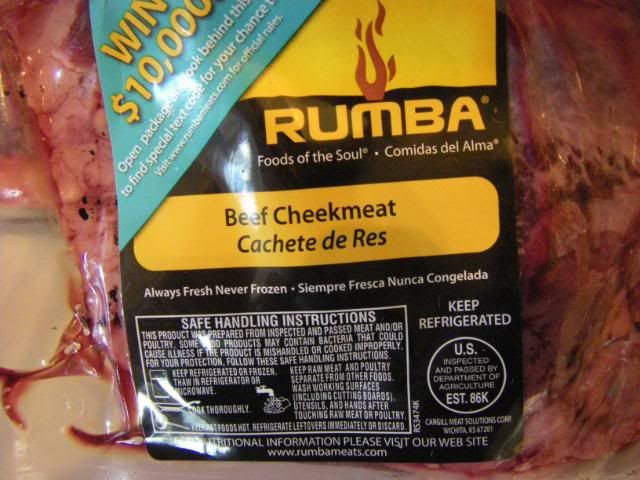
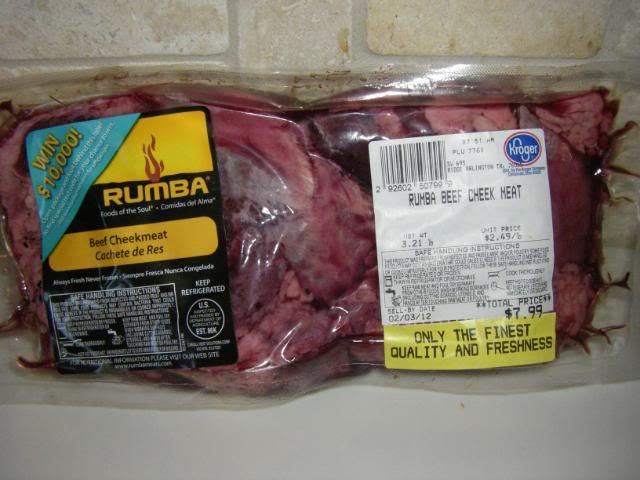
Rumba found at Walmart and Kroger
The total smoke.
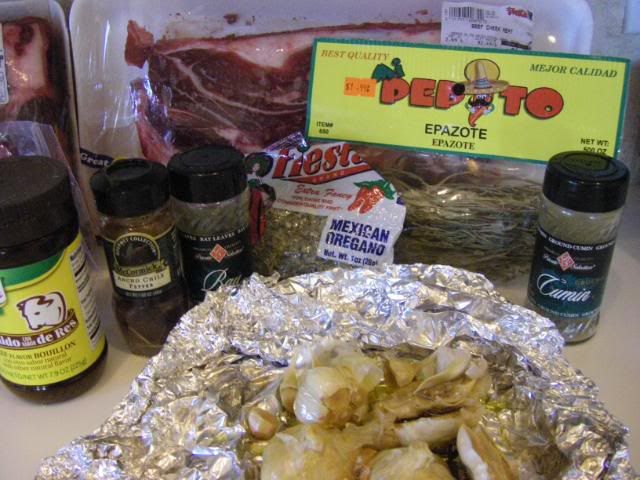
The Rub – Caramelized Garlic, Mexican Oregano, Ground Cumin, Powdered Ancho Chile, Beef Bouillon, Ground Bay Leaf, Pinch of Epazote – Mustard or Oil to make a paste.
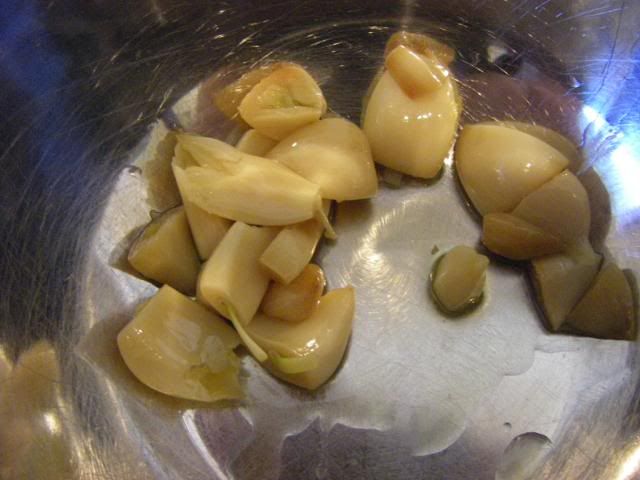
Carmalized Garlic – Smooth this to a paste; add the other rub ingredients. Add enough mustard or oil to rub and hold easily on the meat.
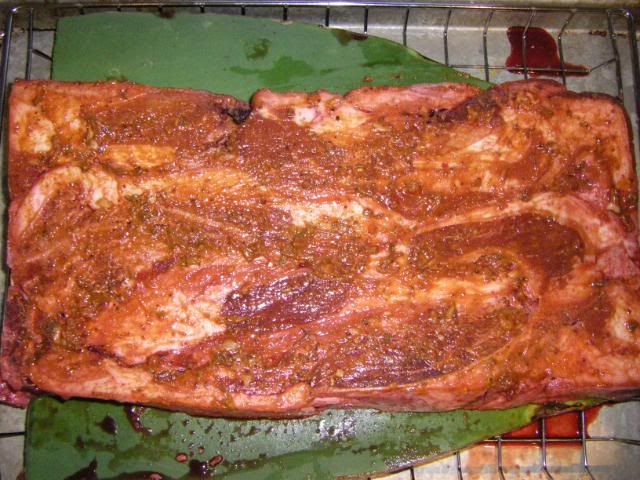
Rub with mixture and place on leaf cut to fit on the Bradley shelf with plenty of air flow around the edges.
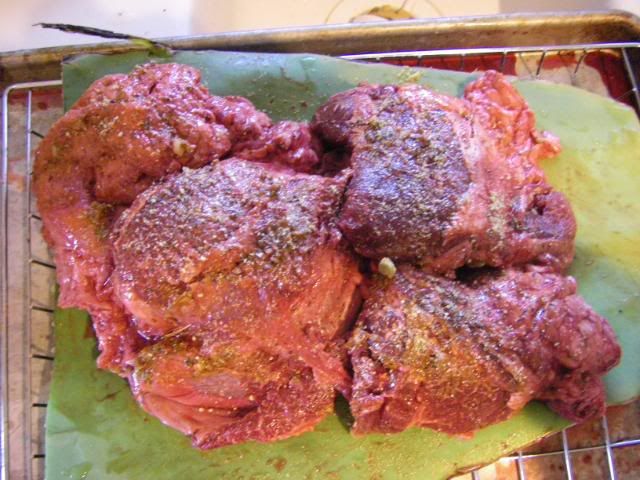
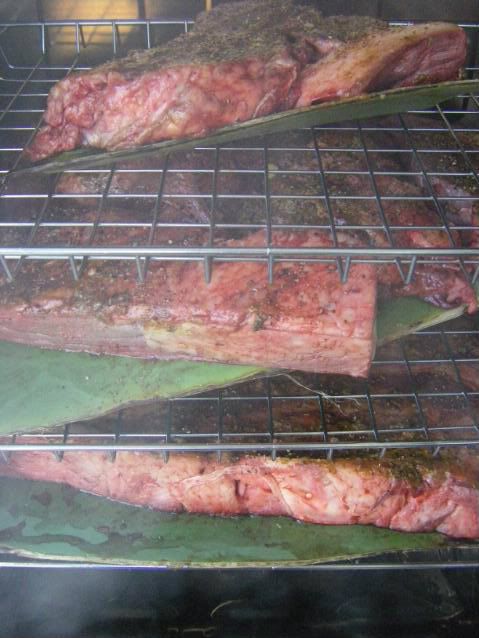
Put it in the Bradley and let the smoke roll. (4 hours of Apple; less with other woods) or until Maillard reaction forms a bark. Since braising retards the Maillard reaction, this heavy bark is not necessarily traditional on Cabeza in the pit but it is some kind of good. However, varying degrees of bark may be encountered in pit barbacoa. I think this adds to the flavor profile without diluting the authenticity. And why not; the Maillard reaction of browning always brings a lot of flavor to the party. At this point the meat is not nearly ready. Very little collagen breakdown has occurred and the meat has retained most of its fat. The internal temperature is well below 160 degrees.
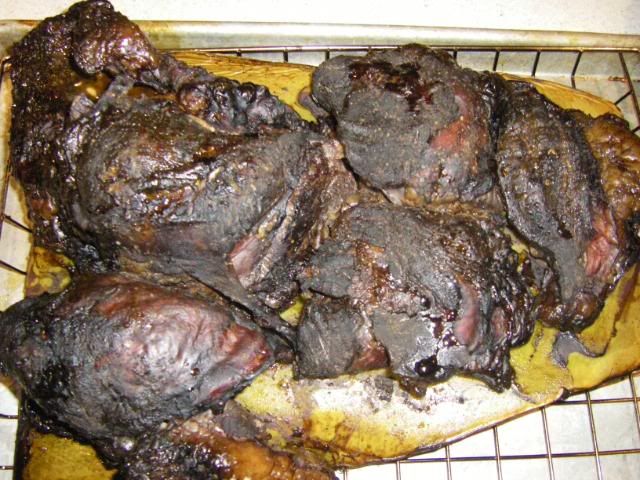
Rumba Out
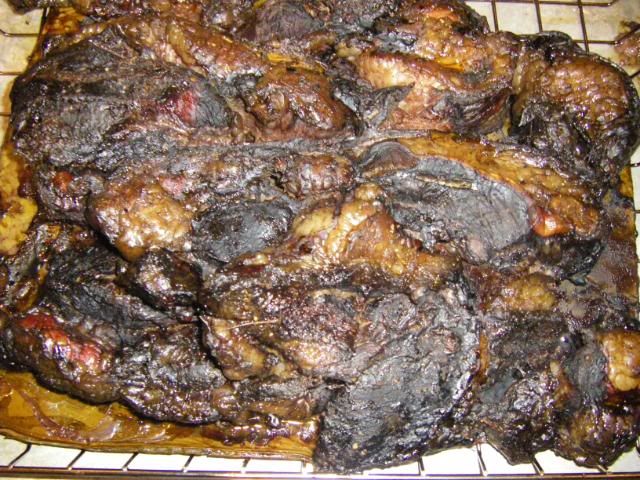
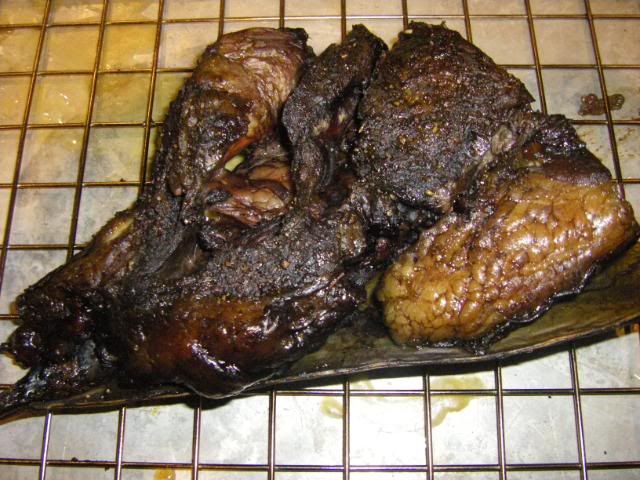
More Fiesta
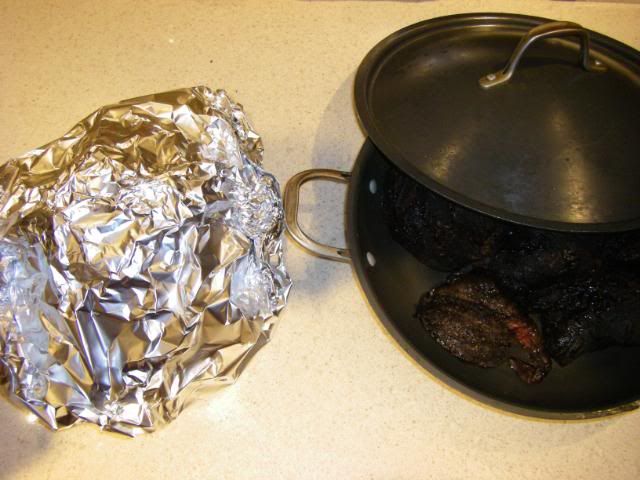
Now at this point, some decisions must be made. This is not like brisket or ribs where I prefer to smoke totally naked (seehttp://www.susanminor.org/forums/showthread.php?775-I-Prefer-to-Smoke-Totally-Naked). It is a braised product.
You can wrap it in foil without the leaf (the leaf has already imparted its flavor; taste a little of the juices on the bottom of the meat if you don’t believe me) and return it to the Bradley to finish its rendering or put it in a covered pan and place it in the oven (El Bradley has already done its smoky magic).
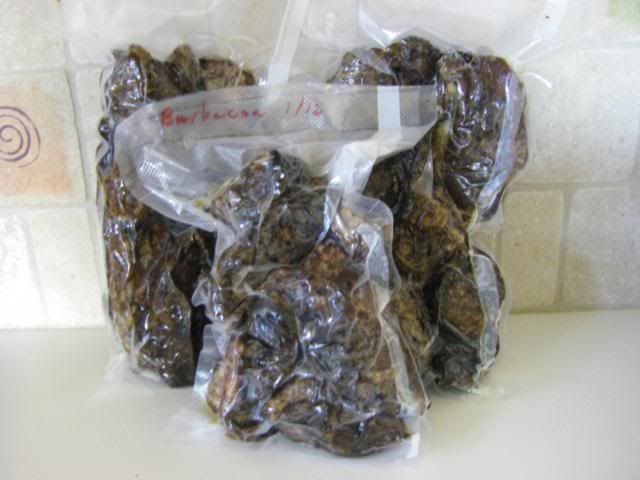
A third option is to freeze a portion to be finished at a later date. I like this third option because the unrendered fats will protect the meat during freezing. I can pull this out of the freezer; finish it in a few hours to produce a fresh barbacoa with minimal fuss.
Add a little apple juice or dark beer; just a splash. There will be plenty of liquid rendered out of the Cachete. Finish at 200 degrees for about four hours or until the meat is fall apart tender; about 195 degrees internal temperature. I like to keep the temperature below boiling to prevent the meat from steaming and giving up moisture. (It is a scientific fact of cooking that a piece of meat boiled under water will become dry by giving up its moisture). This method will render the meat in its own juices, slowly dissolving the collagen into a gelatin and reserving the liquids in the container.
A couple of hours into the process you can toss in some potatoes, onions, tomatoes and carrots if desired for sides. Another option is to add the cooked vegetables to beef broth, seasonings, some of the rendered fats and gelatin to craft a traditional vegetable stew normally made in a catch pot at the bottom of the pit below the cabeza.
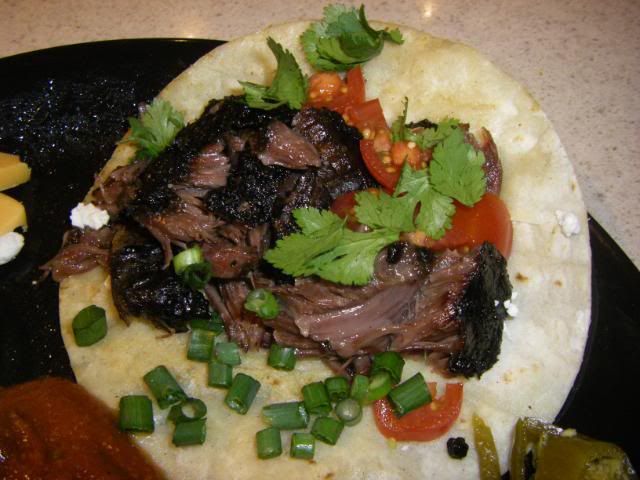
The finished product is a versatile meat that can be served many ways. However the simplicity of a tortilla to soak up the rendered fats and gelatinous liquids topped with minimal fuss is always a winning combination.
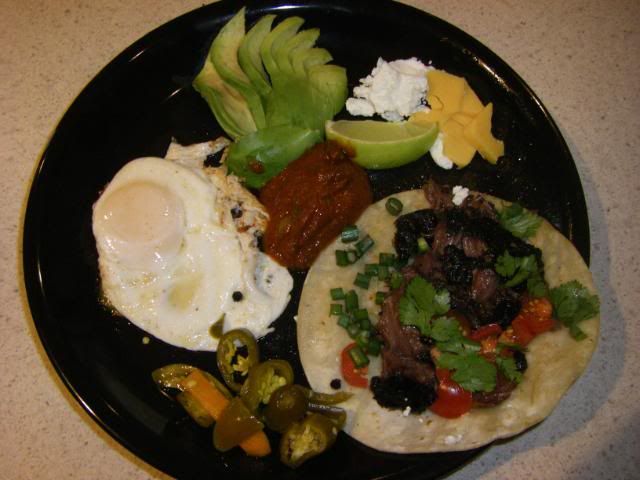
As a mean, talk back to you breakfast, it’s even better. A couple of cheeses. homade pepita salsa. cilantro, green onion tops. ripe avocado, home pickled crisp jalapenos, soft blindfolded egg, a slice of lime and fresh cut tomatoes. (Can you say cure for a hangover?)
Mamma told me there would be good days like this. But she didn’t tell me it would be this good. (I discovered a lot of other things she omitted; mostly vices). I’m on a trip to flavor town.
Ok. Shut me up; hand me another tortilla; and a napkin. This baby has sprung a juicy leak.
Good luck and slow smoking,
Pachanga
more reference:
http://www.homesicktexan.com/2009/07/cow-head-barbacoa.html
Here is a bad picture of my version – using ~3.5 lb of beef cheeks, (we had already eaten a lot). Note that it makes lots of fat and gristle, so not much food is made, but it is definitely the soft, tender, gristly that I’ve been trying to make for so long! I’m excited I figured this out thanks to the internet.
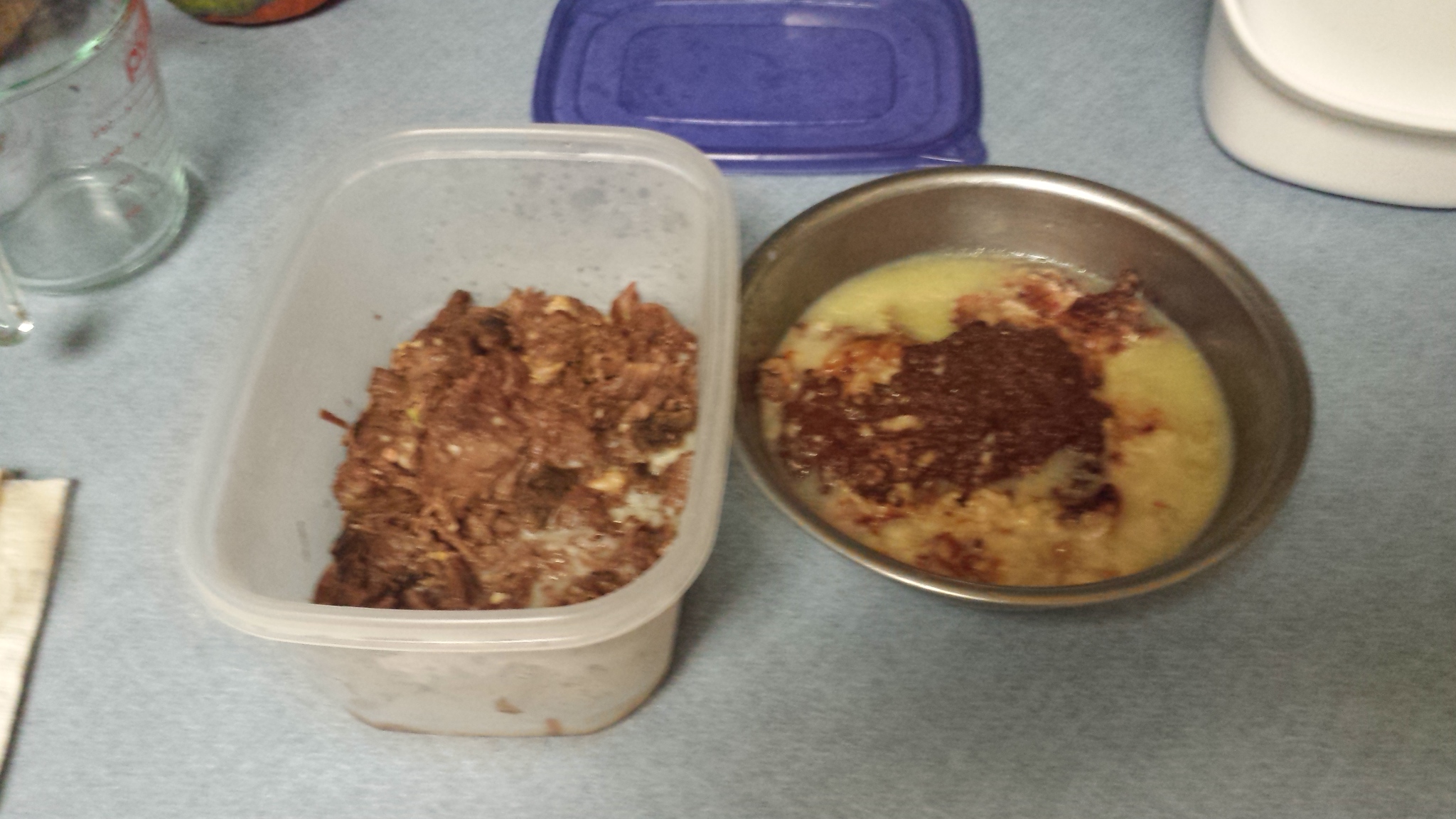
here is a bad picture of the results after it was was eaten. The bowl on the right is the fat that was extracted from 3.5 lb of beef cheeks. Note, HEB, Wal-Mart and Kroger do not sell beef cheeks (at least not anymore), despite what the other sites say. I bought this batch frozen from Reidfield’s meat for $4/lb, I want to try La Michocana again to see their quality of meat.
Note: The broth leftover after the fat is removed makes a pretty good broth for boraccho beans!
-Isaac